1 / The garden design process starts with a conversation
The garden design process rarely begins where people expect. The majority of individuals do not start a garden project because they are thrilled about design drawings or materials. It usually starts with a feeling that something isn’t working. The space is detached, not utilized, or simply does not represent the way they desire to live. The initial step is an appropriate dialogue to unload that. Not only what you find attractive to the eye, but what you actually do with the space on a daily basis. Fun, rest, children, upkeep, privacy, everything. This stage sets the direction for everything that follows, and when it’s done properly, the end result feels considered rather than forced.
2 / Understanding the site and its constraints
Each site possesses its limitations and opportunities and it is where most projects fail. The possibilities are influenced by orientation, levels, soil conditions, drainage, neighbouring properties and access. It is not the exciting part of most clients, but it is one of the most important. A good design is one that works in harmony with the site and not against it. You begin to detect problems at an early stage such as water supply or structural needs and resolve them before they become costly problems in the construction process.
3/ Planning concept and layout.
This is where the project starts to take shape. The concept design is concerned with the organisation of the space and not the detailed appearance. You will see how various areas are interconnected, where people have fun, how people move around the garden and how levels are controlled. It is about having the structure right. If the layout doesn’t work at this stage, no amount of high-end finishes will fix it later. A strong concept creates flow, balance, and purpose across the entire space.
4 / Design refinement and material selection.
When the layout is sorted out, the emphasis is on detail. The choice of materials is made on the basis of appearance and performance, and planting palettes are created to fit the space and climate. Such elements as retaining walls, steps, seating, and paving are well thought of so that they do not seem to be added on. This stage is where the design becomes real. It is also where the budgets are matched with the design intent and minor changes are made to make everything practical without losing the overall vision.
5 / Documentation and technical planning
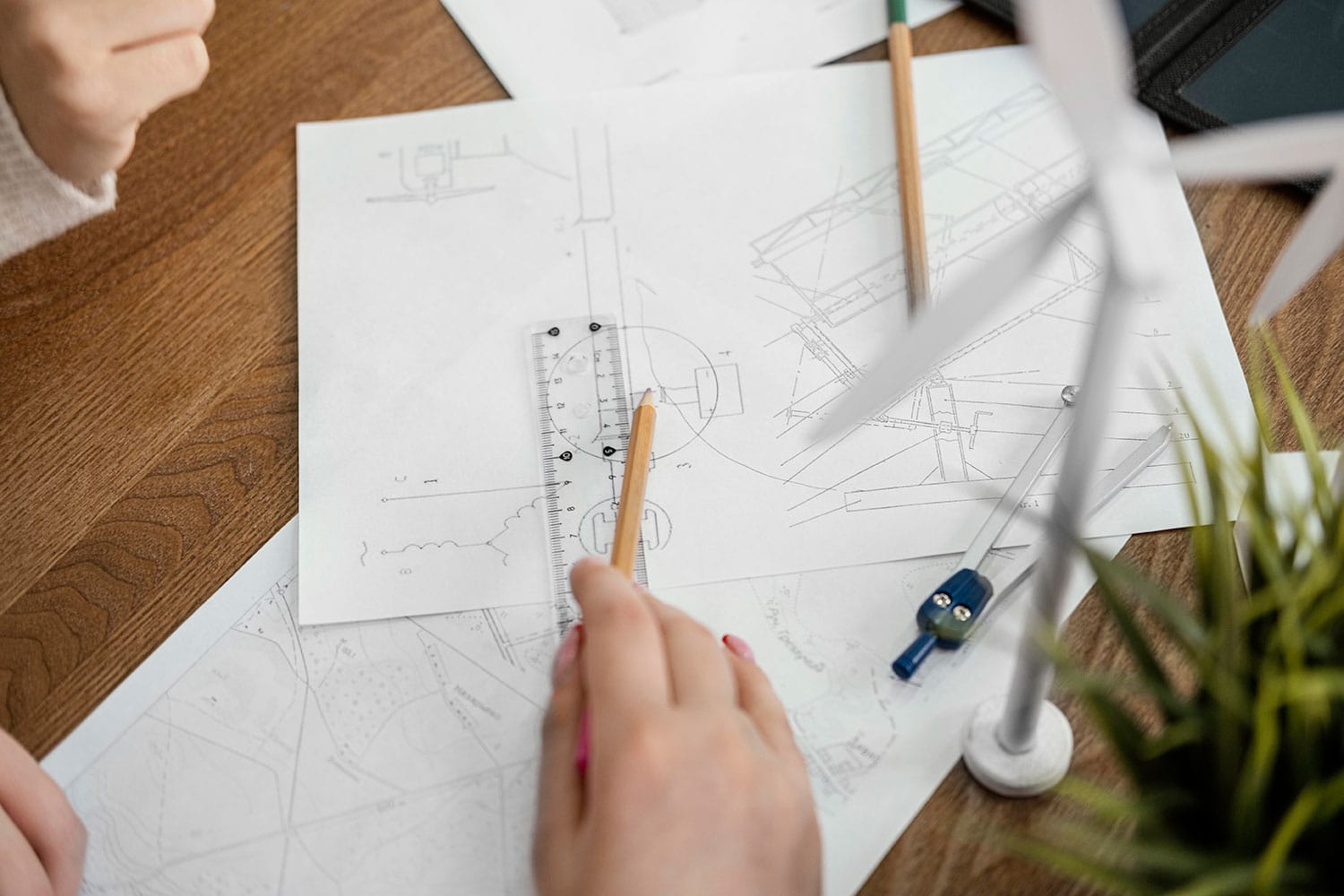
Good design must be supported by documentation. This includes plans that outline levels, dimensions, construction details, and drainage solutions. In the absence of such detail, decisions are made on the ground without context, and this can frequently result in inconsistencies, delays, and cost overruns. Good documentation provides clarity to the builders and makes the final product what was initially planned.
6 / Construction and bringing it to life
It is all assembled in construction and a well-considered design makes this step much more effective. The structural components such as retaining walls and paving are usually done first, then the finishes and details. The point here is that there should be consistency between the design and what is being constructed.
7 / Planting and softening the space
Planting is a very underrated aspect of a garden, yet it contributes immensely to the experience of a garden after it is finished. It makes hard surfaces soft, gives depth, and provides movement to the space. The correct planting scheme does not only appear good on the first day, it develops into the design as time goes by.
8 / Ongoing care and long-term performance
A garden is not a fixed thing, it evolves as it develops and establishes itself in its surroundings. A good design must be able to stand the test of time, and the materials used must age well and the planting should mature well.
9 / The importance of the process.
Design process is not about making it more complex, it is about eliminating uncertainty. Each stage builds on the last, creating a clear path from idea to finished space.
Frequently asked questions
Q. How long does the garden design process take?
The time required to design a garden varies depending on the size and complexity of the project, although the majority of garden designs require a few weeks to a couple of months.
Q. Should I have a landscape design prior to construction?
In most cases, yes. An explicit design eliminates guesses and provides the project with direction.
Q. What is the cost of a garden design?
The cost will differ according to the extent of the project and the amount of detail needed.
Q. Is it possible to make changes to the design after it has begun?
Yes. The design process is a team effort and refinements are included in the design process.
Q. Are you a design and construction company?
Yes. The same team used in the design up to the construction process assists in keeping everything on track.
Ready to start your garden project?
When you are looking at your outdoor space and you are sure that it can be improved, the next thing to do is to have a clear plan. That begins with a discussion. Get in touch and we’ll take it from there.
If you are gathering ideas before that first conversation, the display gardens at Royal Botanic Gardens Victoria are a good place to see mature planting at scale.